In European cities, various digital platforms and annexes are widely used to allow citizens to participate in management decisions and initiate and discuss city projects, to control local authorities and to identify its misconduct and to report cases of corruption and fraud, to participate in the development of applications. Which services work most effectively in European cities and contribute to their development as “open and intelligent”, which is useful for Kharkiv and other major cities of Ukraine – explored the analytical center “Observatory of Democracy”.
Platforms for public participation
Barcelona Open Platform for Citizens' Participation in City Management Decidim.Barcelona It is a worthy model of a convenient set of many services in available formats.
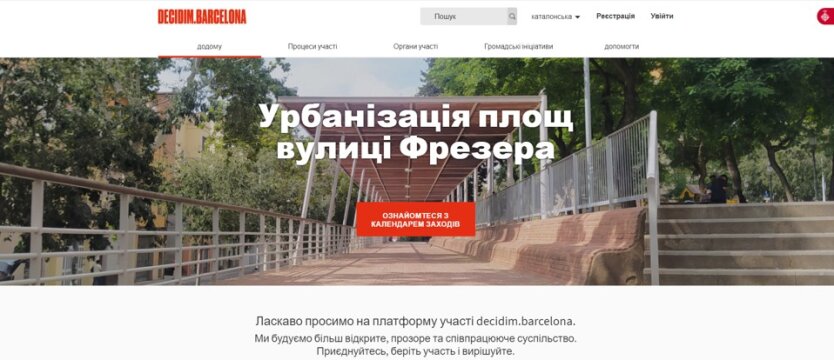
The Barcelona City Council opened this platform on its official website. Its filling with services for public participation fully corresponds to those forms of participation, which sets the regulation of “Citizens' participation regulation”. For each of these forms, there is a separate unit on the platform, which provides up -to -date information about the essence of issues / problems that the city council solves in conjunction with Barcelona, the goals and objectives of public participation, the results that they seek to achieve and the measures that take place within the appropriate form of public participation. On the first page of the platform, the locals are reminded of active processes of public participation. Now there are 7.
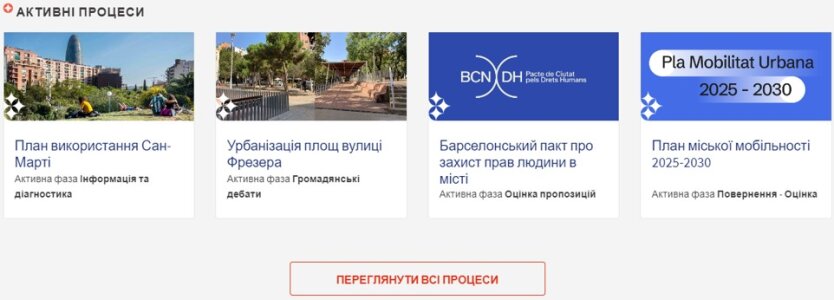
Similarly, the “Participation Bodies” unit informs about the work of 12 such bodies, and the Public Initiatives Unit-on topical initiatives, the process of discussing them and collecting signatures. In a separate section, “help” on thematic reference pages, the locals provide the necessary information about all forms of public participation and how to join them, answers to the questions that Barcelons often ask.
Brussels Municipal Council in 2019 accepted “Charter of Public Participation”. To achieve the main goal – to give a new impetus to citizens' participation, the city authorities have taken a number of measures, including, created Public participation platformwhich provides urgent information about all public participation processes and public initiatives.
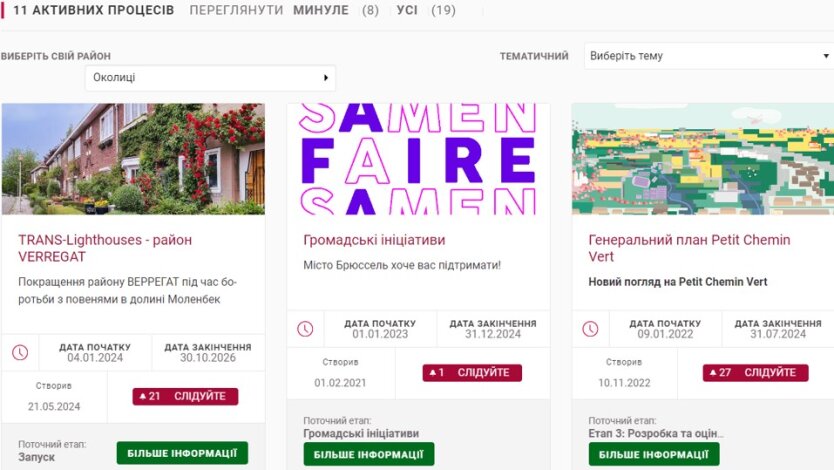
Separate Platform section “Transparency»Contains 6 units -” Open Government “,” Publications of municipal non -profit organizations “,” Management “,” City budget “,” Access to documents “,” Open data “. Each of them presents comprehensive thematic information. In particular, the first contains a large array of documents on the activities of the municipality – from those that describe the organizational structure of the city authorities and the powers of officials, their recruitment and promotion – to town planning plans, permits, annual procurement agreements, grant subsidies, etc. The “budget” unit contains a number of documents on the annual budget process – the budget, accounts, reports. All the regulatory documents, which obliges to publish “Joint Decree and Order of May 16, 2019 on the Open Government in Brussels” is available in the Unit of Documents. You can also access administrative documents here. The open data sets themselves are not presented in the open data. Only a hyperlink is provided to the Brussels open data portal, which houses 500 open data sets.
Complement the openness of the city authorities documents contained in the section “Municipal plans” of the section “Political Life”. They also orient the city residents to certain forms of public participation – from discussions and consultations – to joint decision -making. Such a “Brussels sparkle”, when both information and services for public participation and all documents that provide the transparency of the city authorities and allow the locals to control its activities look quite successful.
Paris City Council provides all information for public participation and about it, as well as the relevant services in the section “Participation of citizens»Section” Public Life “.
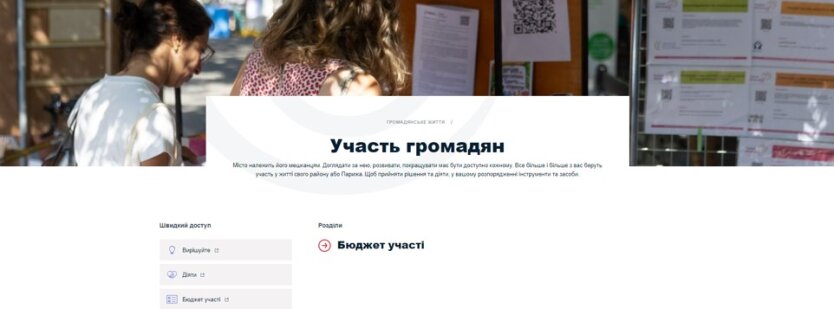
There are services for the participation budget (“Participata Budgeting”), for the work of 11 bodies of city participation. They contain comprehensive information about the bodies and processes of participation, their goals and objectives, the regulatory framework, the progress and results of the relevant forms of public participation, include options for communication with Parisians. Supplements the information base of the thematic news block on public participation, which is located in the same unit. This format is also acceptable and quite convenient. After all, the locals have the opportunity to track the results of their participation in urban cases in real time.
Prevention Services / counteract corruption and fraud
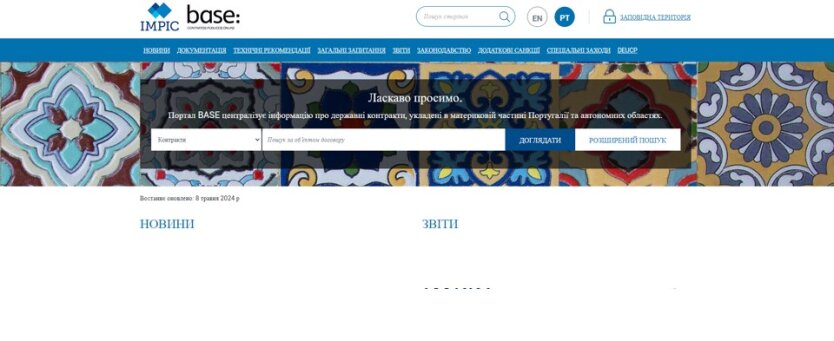
Digital platforms and services used in European cities to combat corruption and fraud of local authorities can be divided into several groups. First, it is Open data portalson which municipalities are placed in the relevant data sets information about procurement, tenders, financial transactions. Many cities use the Open Data Portals platform. These are important resources because in Western countries, the transparency of the authorities is considered an important means of counteracting all types of fraud, and open data sets provide effective tools for the analysis and monitoring of local authorities. Many European cities additionally use special platforms to publish and monitor public procurement data. In particular, Lisbon and other cities in Portugal, Athens use Public Spending Portals.
Platforms to attract locals in the development of services and mobile applications for the development of “smart cities”
The main resource is open data platforms because they provide a lot of information about all areas of cities, which is used by specialists for the development of services and applications. The attachment of citizens to solve the problems of their cities is facilitated by platform of public participation. In many cities, municipalities sites special services for gathering ideas and offers to improve services, such as “CrowdSourcing Platforms” that allow residents of cities to report problems in urban infrastructure, as well as to express and discuss their solutions. In London it is – FixMystreetin thessaloniki – ImproveMycity.
In addition, city professionals in various fields – programmers, designers, architects establish their communities for discussion, creation and testing of innovative developments. Most often used for this use services “Civic Hacing Communities”, “Hackathons and Innovation Challenges”, “Govtech Hackathon”, which, in addition, make it possible to carry out hackathons, workshops, communicate with city authorities, investors and other interests. Yes, “Smart City Expo World Congress»In Barcelona,“Hack the city zurich»In Zurich,“Accelerate Estonia»Tallinn is a popular usage websites, including the aforementioned services for innovative decisions in smart cities.
Conclusions and recommendations
The successful development of “open and intelligent cities” contributes to the active introduction of the city authorities in partnership with the public of various digital services to jointly solve urban problems and improve the quality of life of citizens. In collection, these resources can be compared to the multilayered “Napoleon”, the first and main layer of which is municipal platforms for public participation. They are placed in separate sections of city councils or on separate portals for public participation. Sections / portals contain services for all forms of public participation stipulated by the current regulatory framework of cities. These services allow not only to join various forms of participation, but also to track their course, intermediate and final results. In addition, these sections / portals contain documents that make local authorities as transparent as possible, as well as references to open data platforms.
As the authorities provide access to resources that are at least eternal temptation for officials, additional services work that allow the locals to control the activities of local authorities for real / possible abuse. In democratic countries, the axiom is perceived that the more open power, the smaller it is for corruption and fraud. Therefore, the next layer of Napoleon is large arrays of open data, including hundreds of sets that cover all the activities of the city authorities. Most often, open data is placed on separate portals. They are often supplemented with special platforms for monitoring and controlling the financial operations of municipalities that accumulate and provide information about those areas where corruption and fraud are most likely – purchases, tenders, contracts. In addition, services were introduced for safe information about fraudulent actions, including officials, or suspicions of such actions. In collection, these resources provide a complete cycle of counteraction to various forms of fraud – from preventive measures to the investigation of the facts reported by the locals. Of course, a necessary prerequisite for this, in addition to services, is the public intolerance of fraud and the orientation of the law enforcement system to combat it.
Research on the experience of European metropolitan areas allows you to formulate several topical recommendations for Kharkiv and other cities of Ukraine. To create starting conditions for development in the direction of a “smart city” they need to take the following steps:
- Improve the local regulatory framework in terms of public participation in local government. This means that in the statutes of communities it is necessary to expand the list of forms of public participation not only by those providing for the Law “On Amendments to the Law of Ukraine” On Local Self -Government in Ukraine “and other legislative acts of Ukraine on democracy at the level of local self -government”, but also by those which are what are effectively implemented in European cities. In addition, consolidate in the statutes a list of services to provide all forms of public participation.
- From the available and affordable list of template platforms for public participation, choose a convenient and place it in a separate section “Public participation” of the city council's site, or create a separate site for public participation and provide hyperlinks on it on the main page of the city council site. The platforms of the three cities – Barcelona, Brussels and Paris are an acceptable example of this, although Decidim.Barcelona looks the most convenient factors.
- Start working on filling open data portals with the necessary open data sets with taking into account objective restrictions during the war. Develop open data catalog. It must include topics such as “City Budget”, “Public Budget”, “City Procurement”, “Tenders, contracts, subsidies and grants of the city council”, “Costs of maintenance of city council personnel”, “City Infrastructure”, “Counteraction to corruption and fraud”. Of course, those open data that threatens safety during the war, in particular, about city infrastructure, a number of tenders, contracts and procurement of the city council can only be published after its completion. Data on the “price of the authorities”, the public budget, opposition to fraud need to be published now. The main page of the site of the city council and in the section / on the platform of public participation should have hyperlinks to the portal open data of the city.
- In the section “Public Participation” of the City Council site / on the site for public participation in a separate section “Countering corruption and fraud” to place services for safe notification to citizens about possible corruption and fraudulent actions of officials or suspicion of such actions. Also provide options for local authorities with residents of the city – informing about the actions on the received messages and the results of these actions.
- In the section “Public Participation” of the City Council site / on the site for public participation to place services for collecting ideas and proposals of the locals to improve city services, as well as for reports about problems and complaints about the work of city services and utilities. Also provide open access to the answers to the messages / complaints of the officials whose scope they relate to.
The Analytical Center of Observatory of Democracy.
The material is prepared in the framework of the project “Promoting Citizen Oversight and Engagemen in Local Political Processes”, which is implemented with the financial support of the National Fund in support of democracy (NED). The content of the publication does not necessarily reflect the point of view of NED and is the subject of exclusive responsibility of the analytical center “Observatory of Democracy”.